Wadi Hammamat: An Open-Air Museum in the Egyptian Desert
Wadi Hammamat stands as one of the most remarkable geological and archaeological landmarks in Egypt. Situated as a dry river basin in the heart of the Eastern Desert, it lies precisely midway along the historic route connecting the city of Qift in Qena to Quseir on the Red Sea coast. Far from being a mere dry passage, this ancient valley functioned throughout history as a vital commercial artery and the most direct route linking the Nile Valley to the Red Sea.
A Commercial Artery Linking the Nile to the Red Sea
Throughout history, Wadi Hammamat played a critical strategic role. Rather than acting as a simple transient path, it provided the safest and fastest route for transporting goods, trade caravans, and exploratory missions between the banks of the Nile Valley and Red Sea ports. This crucial function firmly established it as a major civilizational crossroad in the region.
Thousands of Unique Historical Inscriptions and Drawings
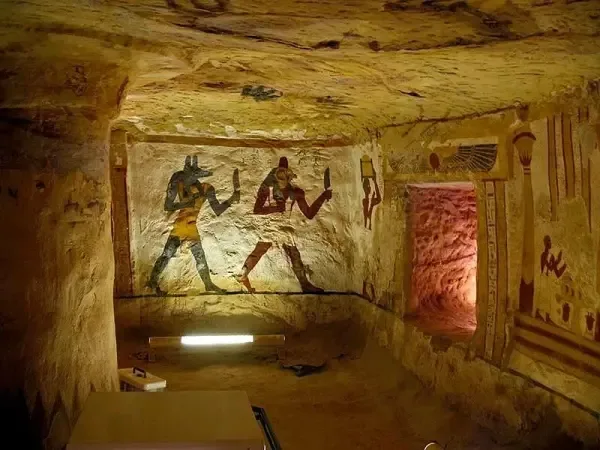
The mountains and rocks lining the valley bear profound witness to human habitation stretching back to prehistoric times. Travelers, prospectors, and kings left behind thousands of rock inscriptions and drawings that tell the story of the land.
- Ancient Wildlife and Depictions: The rocks feature unique engravings of land boats alongside animals such as elephants and ostriches, vividly reflecting the region's ancient environment.
- Multilingual Heritage: The site preserves a rich array of Hieroglyphic, Hieratic, and Greek writings dating across various Pharaonic, Greek, and Roman eras.
An Ancient Mining Center and the Oldest Geological Map
Wadi Hammamat gained widespread fame as a primary mining hub used to extract rare hard rocks. Most notably, it was the source of "Bekhen" stone (greenwacke), which ancient Egyptians utilized to carve statues, sarcophagi, and royal utensils—including the famous Narmer Palette. Furthermore, the valley holds the distinction of being mapped by the oldest known geological and topographical map in history: the Turin Papyrus, which is preserved today in Italy.
A Distinctive Tourist Destination for Safari and Exploration
In modern times, Wadi Hammamat serves as an exceptional touristic and scientific destination for both archaeology enthusiasts and safari travelers. It offers visitors a rare opportunity to retrace the footsteps of ancient Egyptian expeditions and physically touch history etched directly into the rocks of the enchanting Eastern Desert.